

24/7 property restoration
Contents Restoration
Property damage often affects more than the building. Furniture, documents, electronics, textiles, art, and personal items need a separate inventory and handling plan based on material, contamination, and condition.
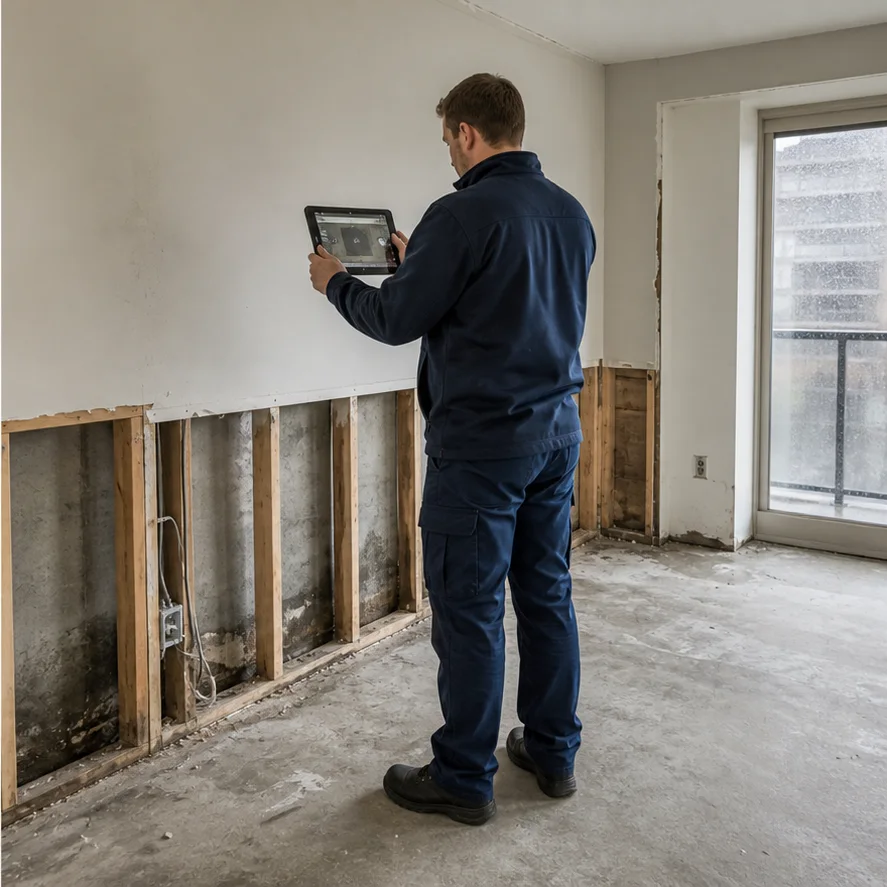
Assessment / stabilization / restoration
Start with the affected area—not assumptions.
Inspection, handling, cleaning, and restoration planning for belongings affected by water, fire, smoke, or mould.
- Water-affected furniture and belongings
- Smoke or soot on household contents
- Documents, photographs, and artwork
- Pack-out and inventory requirements
A clear path from damage to recovery.
Pack-out and handling planning
Cleaning and restoration coordination
Return or disposition documentation
Four stages. One accountable sequence.
Assess
Identify the affected areas, immediate risks, and the next useful action.
Stabilize
Control the source and limit additional damage where the scope allows.
Restore
Clean, dry, remediate, and document the work required for recovery.
Rebuild
Coordinate repairs and return the space to safe, practical use.
Local restoration support where the loss happened.
Contents Restoration FAQ
What types of contents may be considered?
The current service scope identifies documents, electronics, furniture, clothing and textiles, art, antiques, collectibles, and memorabilia as potential candidates for evaluation.
Can every item be restored?
No. Material, contamination, heat, moisture exposure, condition, and cost all affect the practical restoration decision.
Will the items be documented?
A contents process should maintain an organized record of the items assessed, moved, cleaned, returned, or otherwise resolved.