

24/7 property restoration
General Contracting & Reconstruction
Mitigation stops the damage from getting worse; reconstruction returns the space to use. A clear repair scope connects the documented loss, required removals, material decisions, and final finishing work.
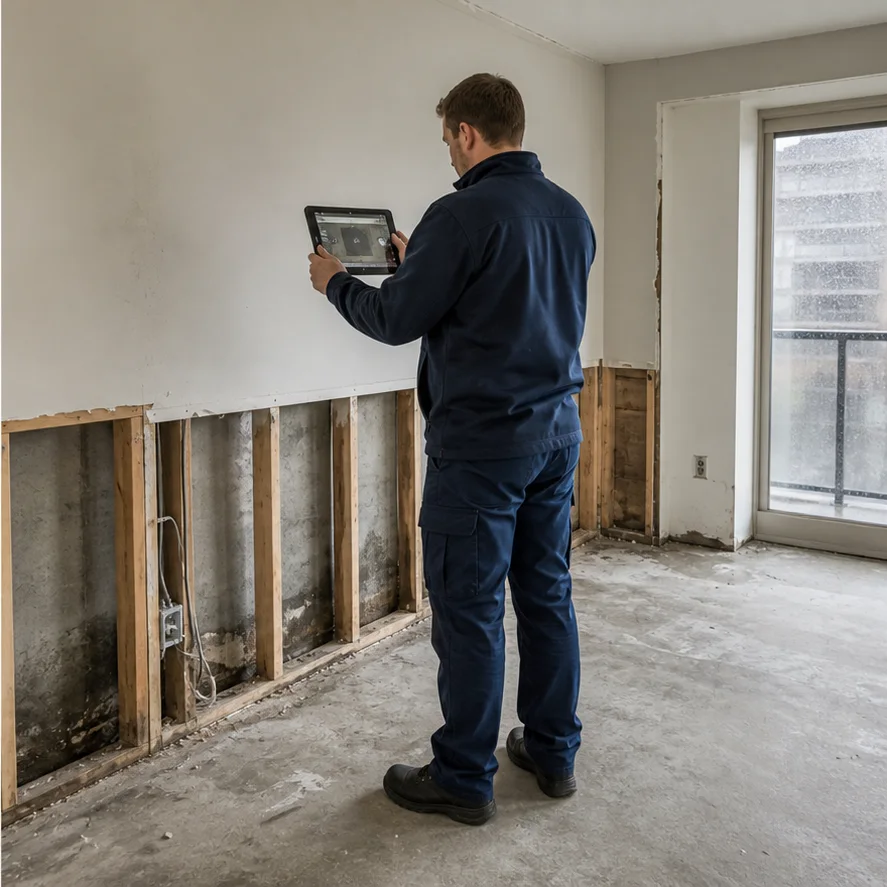
Assessment / stabilization / restoration
Start with the affected area—not assumptions.
Repair and reconstruction planning after emergency mitigation, environmental work, and damaged-material removal.
- Drywall and insulation removal
- Damaged flooring or millwork
- Structural and finish repairs
- Restoration work requiring multiple trades
A clear path from damage to recovery.
Trade and material coordination
Rebuild sequencing
Completion and final review
Four stages. One accountable sequence.
Assess
Identify the affected areas, immediate risks, and the next useful action.
Stabilize
Control the source and limit additional damage where the scope allows.
Restore
Clean, dry, remediate, and document the work required for recovery.
Rebuild
Coordinate repairs and return the space to safe, practical use.
Local restoration support where the loss happened.
Reconstruction FAQ
When does reconstruction begin?
The affected area first needs to be stabilized and any drying, cleaning, or environmental requirements completed. The repair scope then guides reconstruction.
Can one plan cover mitigation and repairs?
The phases are distinct, but documenting them together creates a clearer handoff from emergency work into rebuild decisions.
Do repairs include finishing work?
The exact materials and finishes depend on the confirmed scope. General contracting and reconstruction are part of the published Quick Start service range.