

What to Do After Water Damage Before Restoration Begins
A practical first-response guide for protecting people, limiting additional damage, and preparing for a professional water-damage assessment.
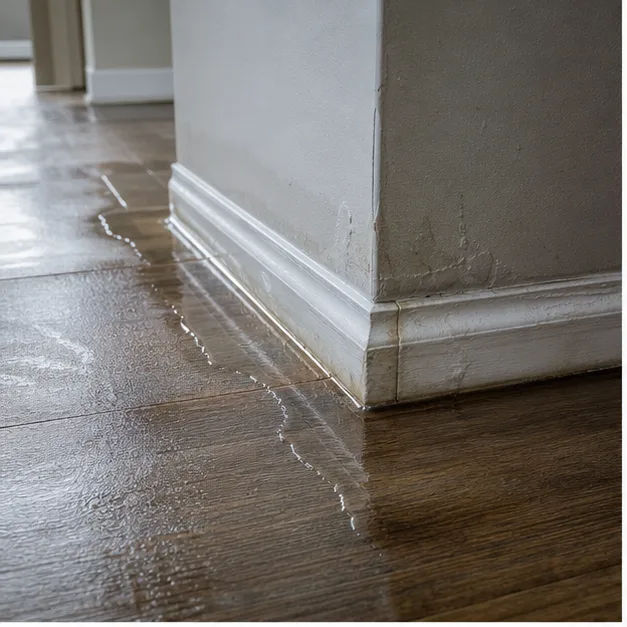
Water damage needs a calm, safety-first response. Keep people away from electrical, structural, and contamination hazards; stop the source only when it is safe; document what happened; and arrange an assessment before hidden moisture spreads farther through the building.
Start with safety, not cleanup
Do not enter an area with standing water near electrical equipment, a sagging ceiling, damaged structural materials, sewage, or another obvious hazard. If the incident involves fire, a gas smell, a serious electrical problem, or an immediate threat to people, contact the appropriate emergency service first.
When the area is safe to approach, identify the likely source without taking unnecessary risks. A failed supply line, overflowing fixture, roof opening, appliance leak, sewer backup, or groundwater entry can each require a different response. If a shutoff is accessible and you know how to operate it safely, stopping the active flow can limit additional damage.
Record the conditions before moving everything
Take clear photos and short video clips of the source, affected rooms, visible water lines, damaged finishes, and affected belongings. Capture wider room views as well as close details. Keep a simple note of when the incident was discovered, what was shut off, and which areas appear affected.
Documentation can help a restoration team understand the original conditions and can support later conversations with a property manager or insurer. Do not delay urgent safety or stabilization work just to collect perfect photos.
Protect unaffected areas where practical
Avoid carrying wet or contaminated items through clean rooms without a plan. If small, unaffected belongings can be moved safely away from the wet area, place them somewhere dry. Leave heavy furniture, attached materials, and anything exposed to sewage or unknown contamination for the restoration assessment.
Do not run ordinary household fans through a contaminated area. Air movement without appropriate containment can carry dust or contaminants beyond the original space.
Why the visible water is only part of the problem
Water can move under flooring, behind baseboards, into drywall, through insulation, and between levels. A surface may look dry while the materials behind it still hold moisture. That is why a professional water and flood damage assessment considers the path the water travelled, the materials involved, and the conditions in adjoining areas.
The restoration plan may include extraction, selective removal, structural drying, monitoring, contents handling, environmental controls, and later repairs. The exact sequence depends on the water source, the building assembly, and how long materials have remained affected.
What to avoid before the assessment
- Do not use electrical appliances in or near wet areas.
- Do not assume the damage stops where the visible staining ends.
- Do not remove fixed flooring, drywall, texture, or insulation without considering environmental hazards in older materials.
- Do not apply bleach, fragrance, or household cleaners as a substitute for understanding the affected materials.
- Do not discard significant contents before documenting them and confirming the practical next step.
Information that helps the restoration team
When you call, be ready to describe the property type, affected rooms, suspected source, whether water is still entering, and any known electrical, sewage, structural, or environmental concern. Mention whether the property is occupied and whether other units or commercial operations may be affected.
Quick Start provides property restoration across Metro Vancouver for homes and businesses. For an active loss, request an assessment or use the published emergency phone number so the next safe action can be established.
FAQs
Should I remove wet flooring or drywall myself?
Not before the affected assembly and potential hazards are understood. Older finishes may require an environmental assessment, and premature removal can spread contamination or erase useful damage evidence.
Can a room be dry if the surface feels dry?
Yes. Moisture can remain below flooring, behind finishes, or inside cavities. The assessment should consider adjacent materials and use appropriate measurements to define the drying scope.
Does water restoration include repairs?
The immediate phase focuses on assessment, stabilization, extraction, and drying. Quick Start also publishes reconstruction services for the repair phase once mitigation and environmental requirements are complete.