

Mould After Water Damage: Warning Signs and Next Steps
How moisture problems can lead to mould concerns, what signs to watch for, and why the source, affected materials, and work area must be assessed together.
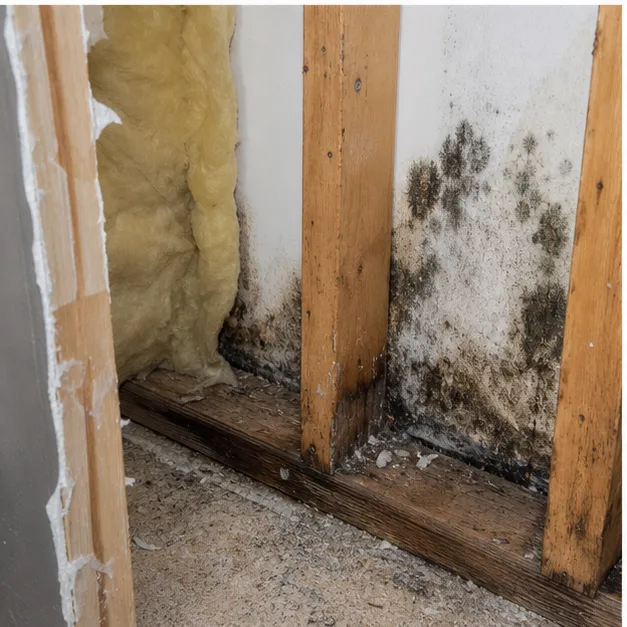
Mould after water damage is usually a moisture problem first. Visible staining or a musty odour may identify one affected area, but a useful response also asks where the water came from, how far it travelled, which materials stayed damp, and whether growth may extend behind finishes.
Watch for changes after a leak or flood
Possible warning signs include new staining, discolouration, a persistent musty smell, swollen trim, soft drywall, lifting flooring, condensation, or recurring dampness. These signs do not all confirm mould, but they show that the moisture condition deserves attention.
Check the areas beside and below the original incident as well as the obvious wet spot. Water can move into wall cavities, under finished flooring, through insulation, or between units. A past leak that appeared minor may still matter if materials could not dry.
Do not disturb a suspect area without a plan
Scraping, sanding, removing drywall, or directing fans at a suspect area can release dust and spread material beyond the original space. This is especially important when the affected area is larger, hidden, connected to a ventilation path, or located in a building with older materials that may present separate environmental concerns.
Keep people away from the immediate work area when conditions are uncertain. Do not mix cleaning products or apply fragrance to mask an odour. If someone is experiencing an urgent health issue, seek appropriate medical help; the restoration assessment addresses the building condition, not individual medical diagnosis.
Find and correct the moisture source
Cleaning the visible surface without correcting the moisture source leaves the underlying condition unresolved. The source may be a plumbing leak, exterior water entry, groundwater, condensation, poor drainage, an appliance failure, or moisture trapped after an earlier incident.
The response should determine whether water is still entering, whether materials can be dried in place, and whether repairs are required before the area is closed. Quick Start's water and flood damage service covers assessment, extraction, drying, and restoration planning when an active or recent water loss is involved.
What a remediation plan considers
Professional mould and environmental remediation is based on the affected area and materials. A project may include:
- Assessing the visible condition and the likely moisture path.
- Defining the work area and appropriate containment.
- Protecting adjacent occupied or unaffected areas.
- Removing materials that cannot be practically cleaned or restored.
- Cleaning retained surfaces using methods appropriate to those materials.
- Drying the assembly and addressing the moisture source.
- Confirming the repair sequence before reconstruction.
Not every situation requires the same equipment or removal scope. The plan should be proportional to the observed conditions instead of applying one universal method.
When a small surface issue may be more complicated
A limited spot can require a broader assessment when it keeps returning, appears after a significant leak, produces an odour beyond the visible area, affects porous building materials, or may extend into a shared wall or floor assembly. Multi-unit properties may also require coordination with strata, property management, neighbouring occupants, or building maintenance.
Older materials introduce another decision point. Restoration work that opens walls, ceilings, flooring, texture, or insulation may need a separate environmental assessment before disturbance. Asbestos abatement and mould remediation are different services with different work requirements.
Plan the repair only after the affected area is understood
Closing a wall or replacing finishes too early can hide unresolved moisture or contamination. Once removal, cleaning, and drying requirements are complete, the repair scope can address drywall, insulation, trim, flooring, paint, or other finishes.
Quick Start provides restoration support across Vancouver, Burnaby, New Westminster, and Surrey. To discuss a suspected mould or moisture issue, request an assessment and describe the original water event, current warning signs, and affected areas.
FAQs
Does a musty smell always mean mould?
Not always, but a persistent musty odour can indicate an unresolved moisture or concealed-material issue. The source and affected assembly should be assessed instead of masking the smell.
Can mould be painted over?
Painting does not correct the moisture source or remove affected material. The condition should be understood and the necessary cleaning, removal, and drying completed before finishes are restored.
Are mould remediation and asbestos abatement the same service?
No. They involve different hazards and work controls. Suspect older building materials may require a separate assessment before a mould-related wall, ceiling, or floor assembly is disturbed.